
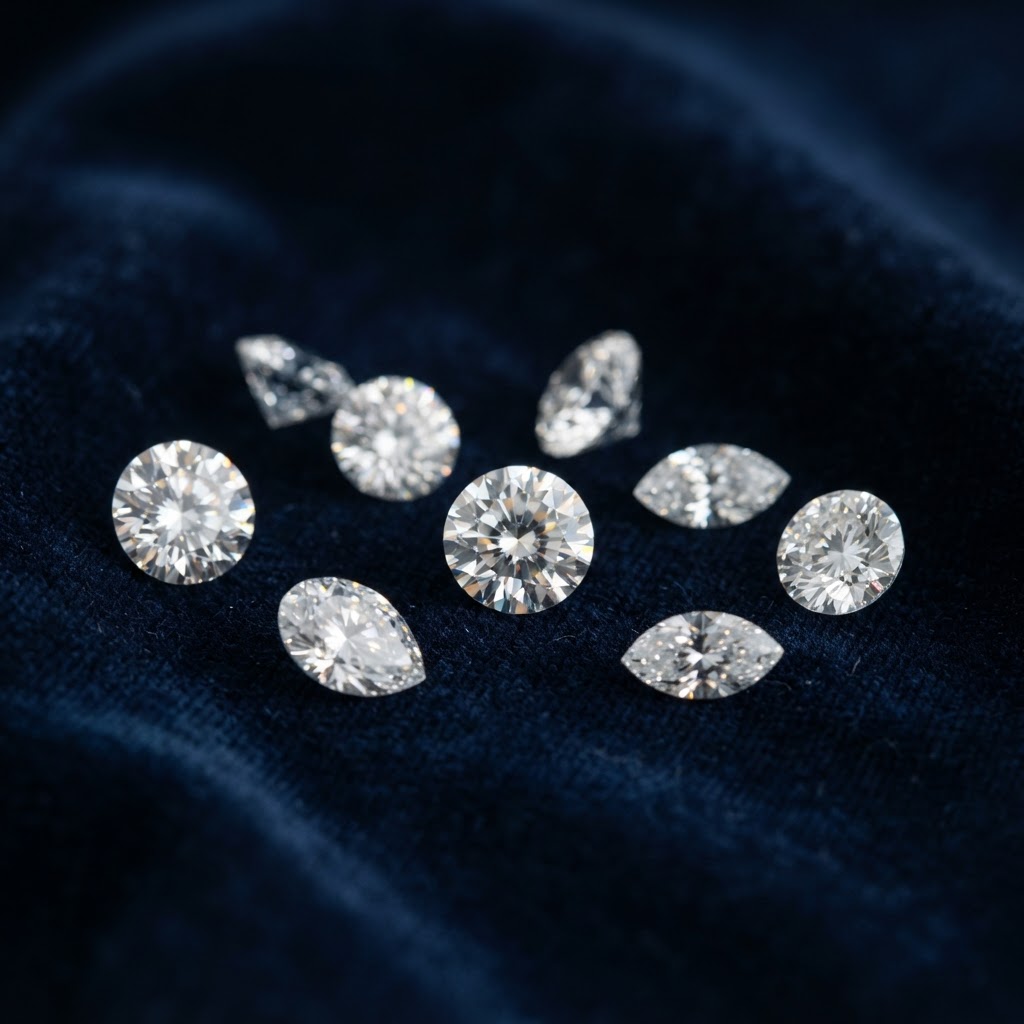
Real Brilliance. Scientific Confidence.
An authoritative guide to laboratory-grown diamonds — what they are, how they are made, and how professional grading gives you confidence in every stone.
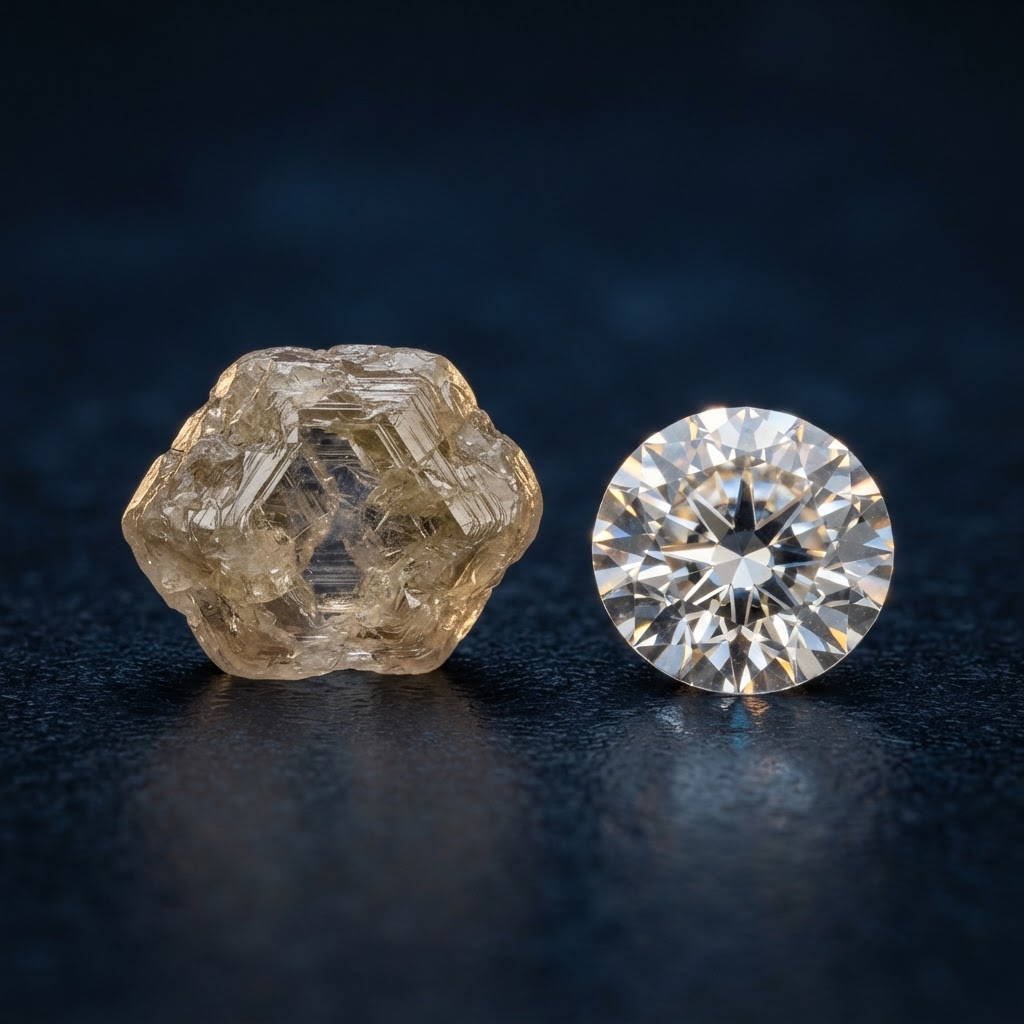
A real diamond, grown in a laboratory.
A laboratory-grown diamond is crystallised carbon with essentially the same chemical composition, crystal structure and optical properties as a natural diamond. It is not an imitation: simulants such as cubic zirconia or moissanite are different materials.
The difference lies in origin. A natural diamond formed over millions of years deep in the earth; a lab-grown diamond is grown in a matter of weeks under carefully controlled conditions.
Two methods. One crystal.
Today's laboratory-grown diamonds are produced by one of two processes.
A thin diamond seed sits in a chamber of carbon-rich gas. Energised into a plasma, the gas releases carbon atoms that settle onto the seed, building the crystal layer by layer.
Powerful presses recreate the extreme pressure and heat found deep within the earth. Carbon dissolves in a metal solvent and crystallises onto a diamond seed.
Identical to the eye. Distinguished in the laboratory.
Because lab-grown and natural diamonds look the same, telling them apart requires specialised equipment. Gemologists study growth patterns, fluorescence and spectroscopic signatures that reveal how a diamond formed.
| Lab-grown | Natural | |
|---|---|---|
| Composition | Crystallised carbon | Crystallised carbon |
| Optical & physical properties | Essentially the same | Essentially the same |
| Formation | Weeks, in a laboratory (CVD or HPHT) | Millions of years, deep in the earth |
| Appearance to the eye | Indistinguishable | Indistinguishable |
| Identification | Specialised laboratory testing | Specialised laboratory testing |
| Graded on | The 4Cs | The 4Cs |
The universal language of diamond quality.
Lab-grown and natural diamonds are graded on the same four criteria, recorded on every WGI Diamond Grading Report.
Cut
How well the facets interact with light. Proportions, symmetry and polish determine brightness, fire and scintillation.
Colour
Graded from D (colourless) towards Z by comparison under controlled lighting.
Clarity
Inclusions and blemishes under 10× magnification, from Flawless through VVS, VS and SI to Included.
Carat
A unit of weight: one carat equals 0.2 grams.
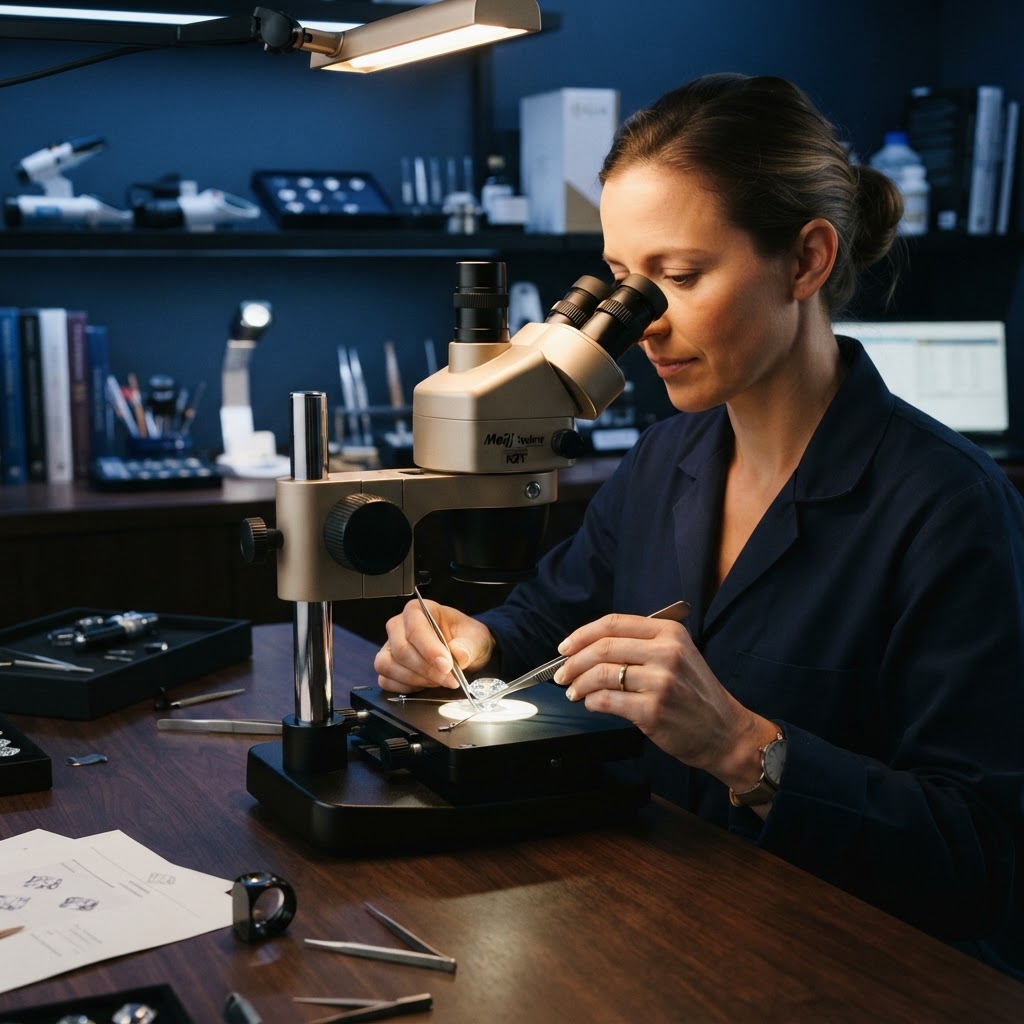
Independent analysis. Accurate reports.
Grading is the only way to know precisely what a diamond is. An independent report confirms origin, records the 4Cs and gives buyers and sellers a common reference.
WGI has no vested interest in the outcome of a report. Every WGI report carries a unique number that can be verified online, so the information stays with the diamond.
Lab-Grown Diamonds in Fine Jewellery.
Lab-grown diamonds are set in engagement rings, wedding bands, necklaces, earrings and bracelets. A WGI Jewellery Report or card describes the piece, its metal and every stone — with laboratory-grown origin stated clearly.
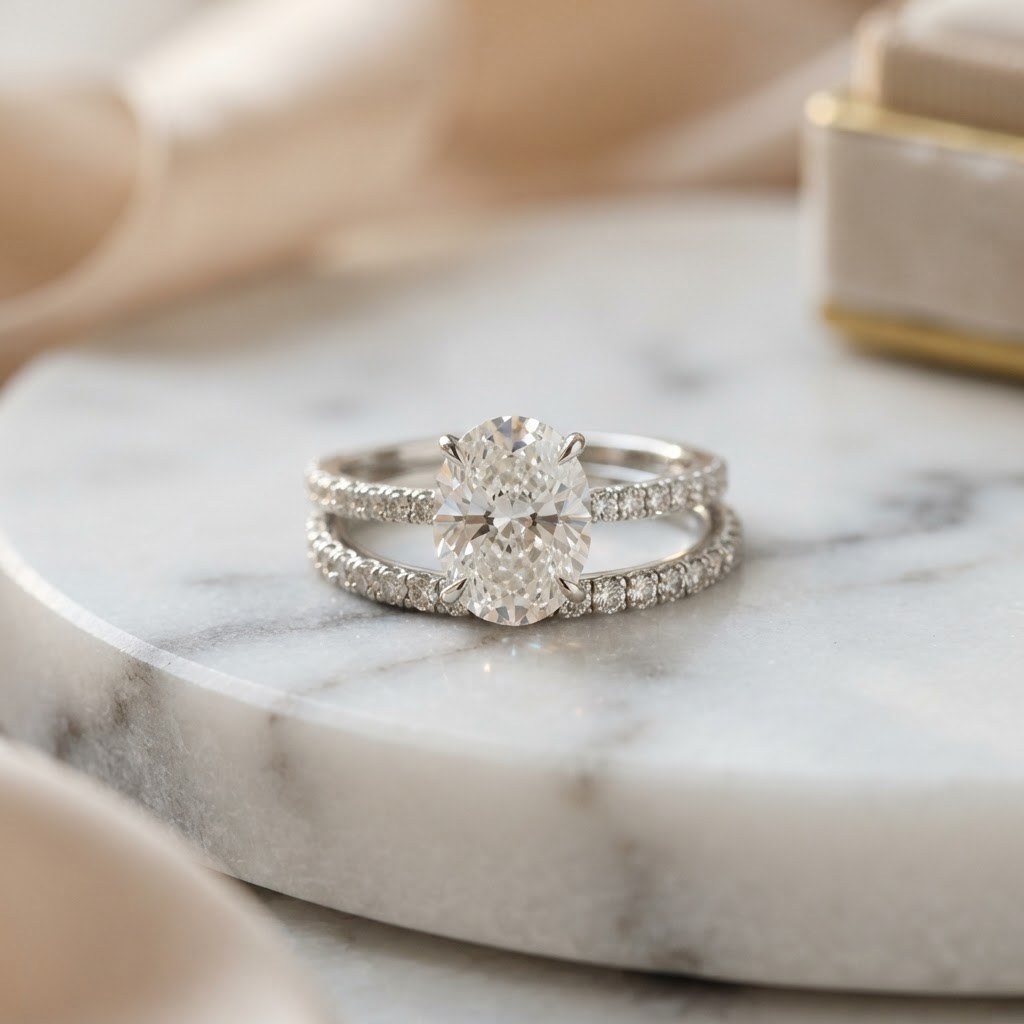
Engagement rings & wedding bands
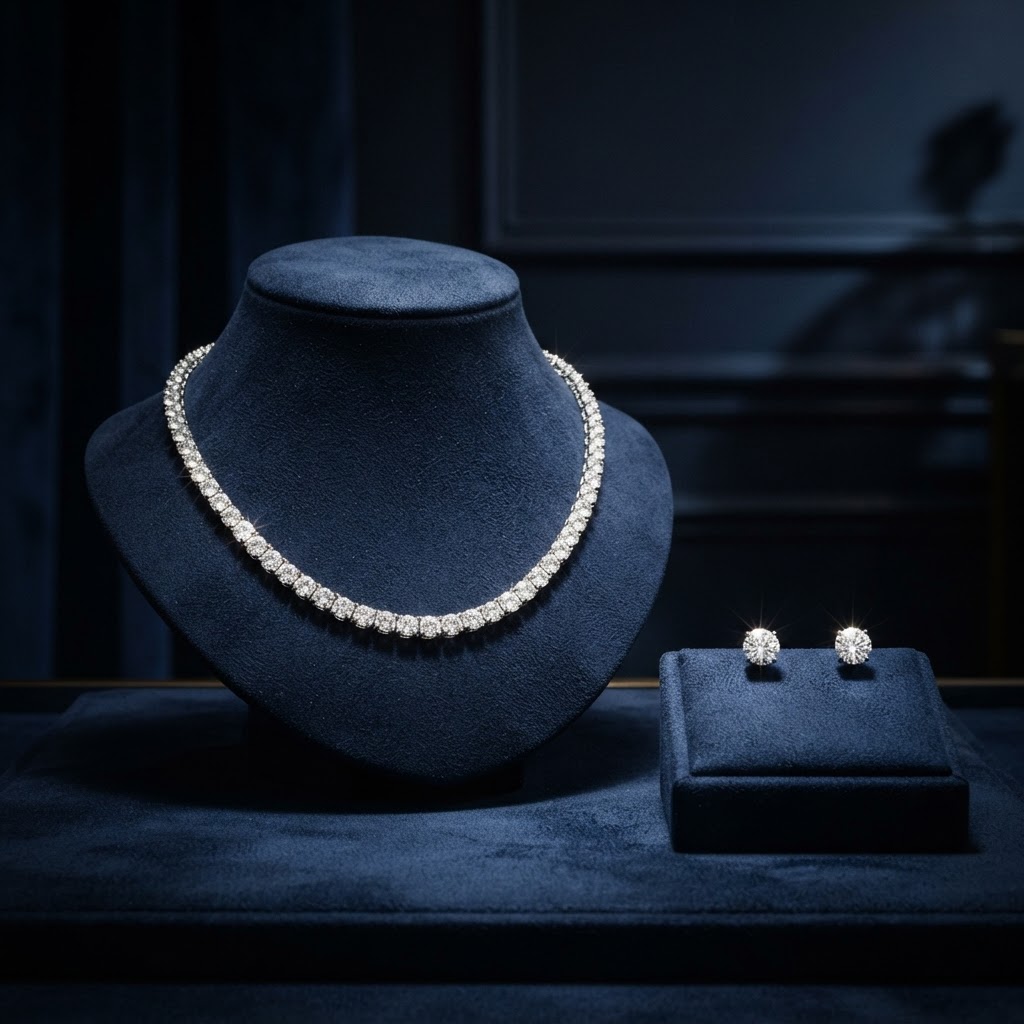
Necklaces & earrings
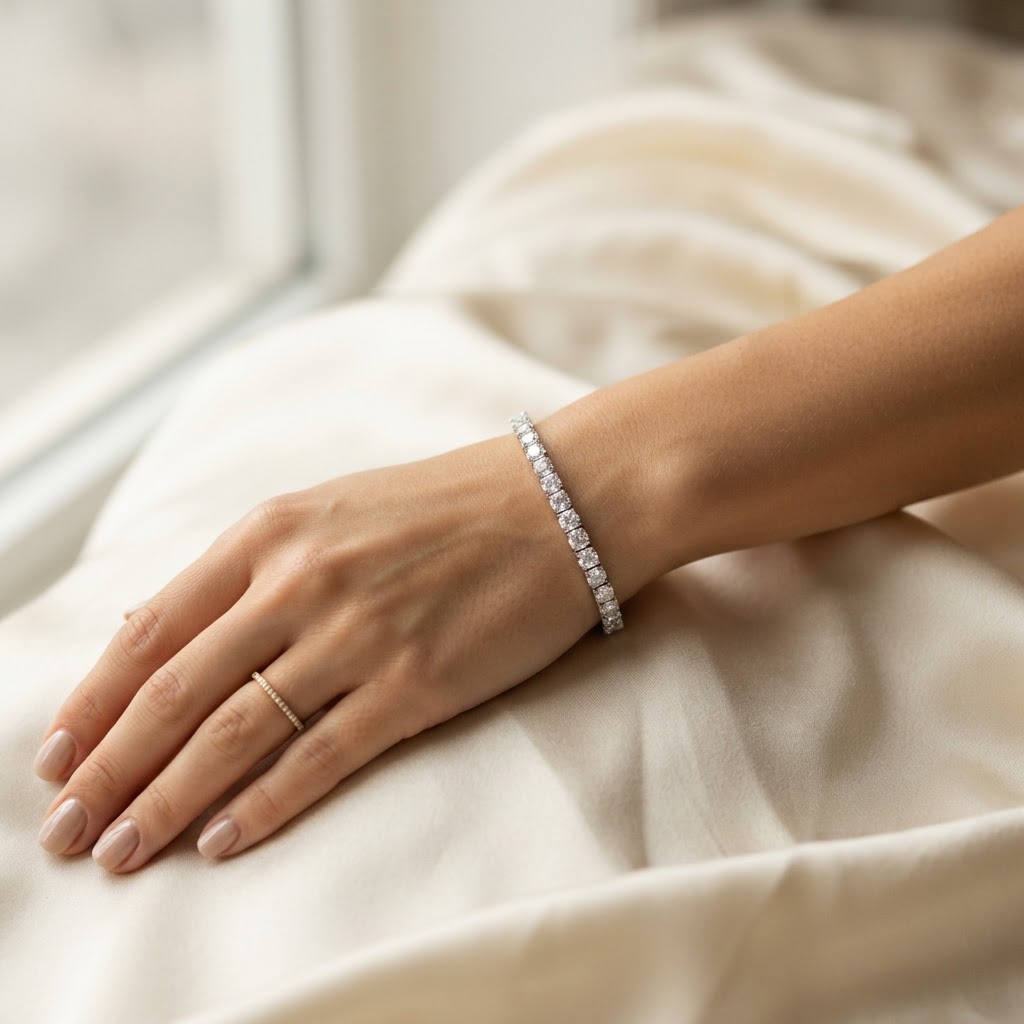
Bracelets
Discover the Confidence of WGI.
Whether you are exploring lab-grown diamonds, seeking professional gemological services or learning more about your jewellery, discover the expertise behind WGI.