
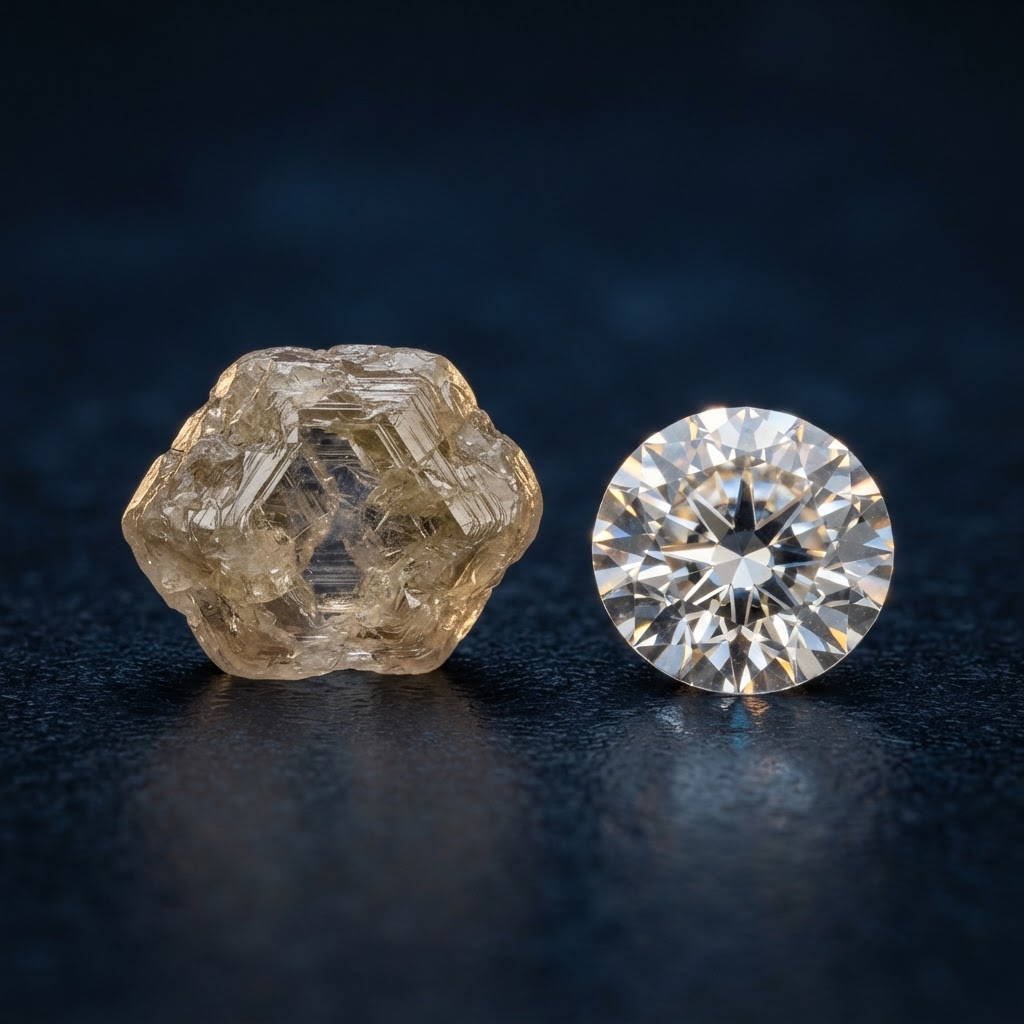
Real diamond, grown in a laboratory
A laboratory-grown diamond is crystallised carbon with essentially the same chemical, physical and optical properties as a natural diamond. The difference is its origin: it is grown in weeks under controlled conditions rather than over millions of years in the earth.
CVD — Chemical Vapour Deposition
A thin diamond seed is placed in a chamber filled with carbon-rich gas. The gas is energised into a plasma and carbon atoms settle onto the seed layer by layer, growing a diamond crystal.
HPHT — High Pressure, High Temperature
HPHT recreates the extreme pressure and heat found deep in the earth. Carbon dissolves in a metal solvent and crystallises onto a diamond seed.
How laboratories tell the difference
Because lab-grown and natural diamonds look the same to the eye, identification relies on specialised equipment. Gemologists study growth patterns, fluorescence and spectroscopic signatures that reveal how a diamond formed.